
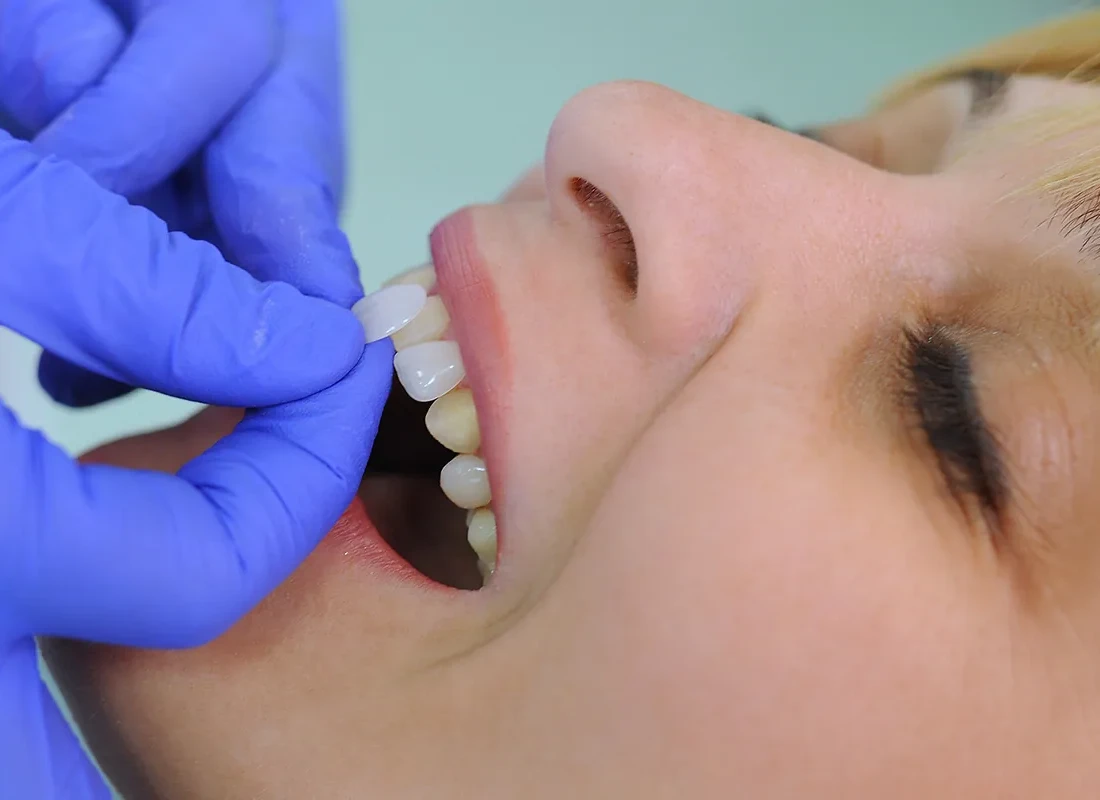
Veneers suit healthy teeth with cosmetic concerns, and a few habits and bite patterns can rule them out.
Seen a smile you admire and wondered whether veneers could do the same for yours? The answer to who veneers work best for starts with the teeth underneath rather than the smile you want.
Veneers are custom-made, natural-looking coverings that bond to the front surface of a tooth to change its color, shape or spacing. They work best on teeth and gums that are already healthy.
Quick Answer
Veneers work best for people with healthy teeth and gums and a cosmetic concern on the front of a tooth, such as chips, stains, gaps or uneven edges. Decay or gum disease needs treatment first, and heavy grinding or a deep overbite can rule veneers out. A dentist decides after an exam.
Key Takeaways
- Veneers can improve chipped, stained, crooked or misshapen teeth and can mask gaps in a smile.
- Decay or gum disease must be treated first, because veneers over unhealthy teeth can worsen problems.
- Enamel is removed to place a veneer, so the treatment is not reversible.
- Clenching, grinding or a deep overbite can make veneers a poor choice for some people.
- Porcelain and composite veneers differ in strength, stain resistance and how much enamel they need removed.
Which Smile Concerns Do Veneers Address?
Veneers can improve four kinds of cosmetic problems. Teeth that are chipped or broken can be covered, and so can teeth that are stained in a way whitening does not touch. Crooked or misshapen teeth can be given a more even outline, and gaps can be masked.
All of these concerns sit on the surface of the tooth. A veneer covers only the front, which separates it from a crown that wraps the entire tooth.
Does the Health of the Teeth and Gums Matter First?
It matters before anything else. Any decay or gum disease has to be treated before a veneer goes on, because placing veneers over unhealthy teeth can make existing problems worse.
Cavities can also form under or around a veneer later, so daily brushing and cleaning between the teeth stay part of the routine afterward.
Can Grinding or a Deep Overbite Rule Veneers Out?
For some people, yes. Clenching or grinding the teeth, or having a deep overbite, can make veneers a poor choice. A veneer may chip, crack, wear down or loosen over time, and grinding adds to that wear.
A person who grinds may still be a candidate, but the dentist needs to know about the habit before planning treatment. The dentist can then say whether veneers are realistic or whether the grinding should be addressed first.
How Do Porcelain and Composite Veneers Compare?
According to MouthHealthy from the American Dental Association, the two main types are porcelain and composite. A porcelain veneer is a thin shell custom-made to fit the front of the tooth. Porcelain is strong, long-lasting and natural-looking, and it tends to be the more expensive option.
A composite veneer is made from tooth-colored filling material bonded to the tooth. Composite may require less tooth enamel to be removed and fewer visits, and it can be repaired more readily if it is damaged. The trade-off is that it is not as stain- or wear-resistant as porcelain.
Each type suits different cases. The choice depends on the condition of the tooth, how much change the smile needs and how the person bites and chews.
What Happens During the Veneer Appointments?
Placing either type includes picking a color shade that matches the natural teeth, and the dentist helps make that decision. For a porcelain veneer, the dentist removes a small amount of enamel from the front and sides of the tooth. An impression or a 3D scan of the tooth is then sent to a dental lab, where a technician custom-makes the veneer.
A temporary veneer may be worn until the permanent one is ready. At the fitting, the veneer is placed to check its shape and fit. After any adjustments, the teeth are cleaned and the veneer is bonded in place.
A composite veneer is built right on the tooth. The dentist bonds and sculpts the material, hardens it with a special light, then smooths and polishes it to look like the natural tooth. A bite that feels off after either type should be reported so it can be corrected.
Why Should a Licensed Dentist Place Veneers?
Because the treatment is not reversible, the decision to place veneers should be made by someone licensed to diagnose the teeth underneath. The American Dental Association has cautioned that unlicensed individuals offering veneer services may expose patients to infection and nerve damage. An unlicensed provider may also place veneers over unhealthy teeth without knowing it.
A licensed dentist reviews dental history, expectations and reservations before any enamel is touched. The dentist then decides from that review and an exam whether veneers fit.
Frequently Asked Questions
Are veneers covered by dental insurance?
Veneers are considered cosmetic dentistry, so insurance may not cover them unless they are deemed medically necessary. A plan’s own rules decide, so it helps to ask the insurance company and the dental office before treatment starts. The office can explain what a plan would and would not pay.
Can veneers fix stains that whitening does not touch?
Yes, veneers can cover teeth that are stained in a way whitening does not touch. A veneer sits over the front of the tooth, so the stain underneath no longer shows. A dentist checks the teeth and gums first to confirm that veneers fit before any enamel is removed.
Do veneers last forever?
Porcelain is strong and long-lasting, but any veneer may chip, crack, wear down or loosen over time. Grinding adds to that wear, and cavities can still form around a veneer. Brushing, cleaning between the teeth and telling the dentist about grinding all help a veneer last.
Related Reading
About the Author
This post was reviewed by Dr. Hassan Alshehabi, DDS, owner and lead dentist at Delicate Smiles. His clinical focus includes dental implants, full-mouth restoration, family and preventive dentistry, and cosmetic and restorative care.
- If you want to learn more about who veneers work best for, visit our Veneers in Milwaukee, WI, page or schedule a consultation.