
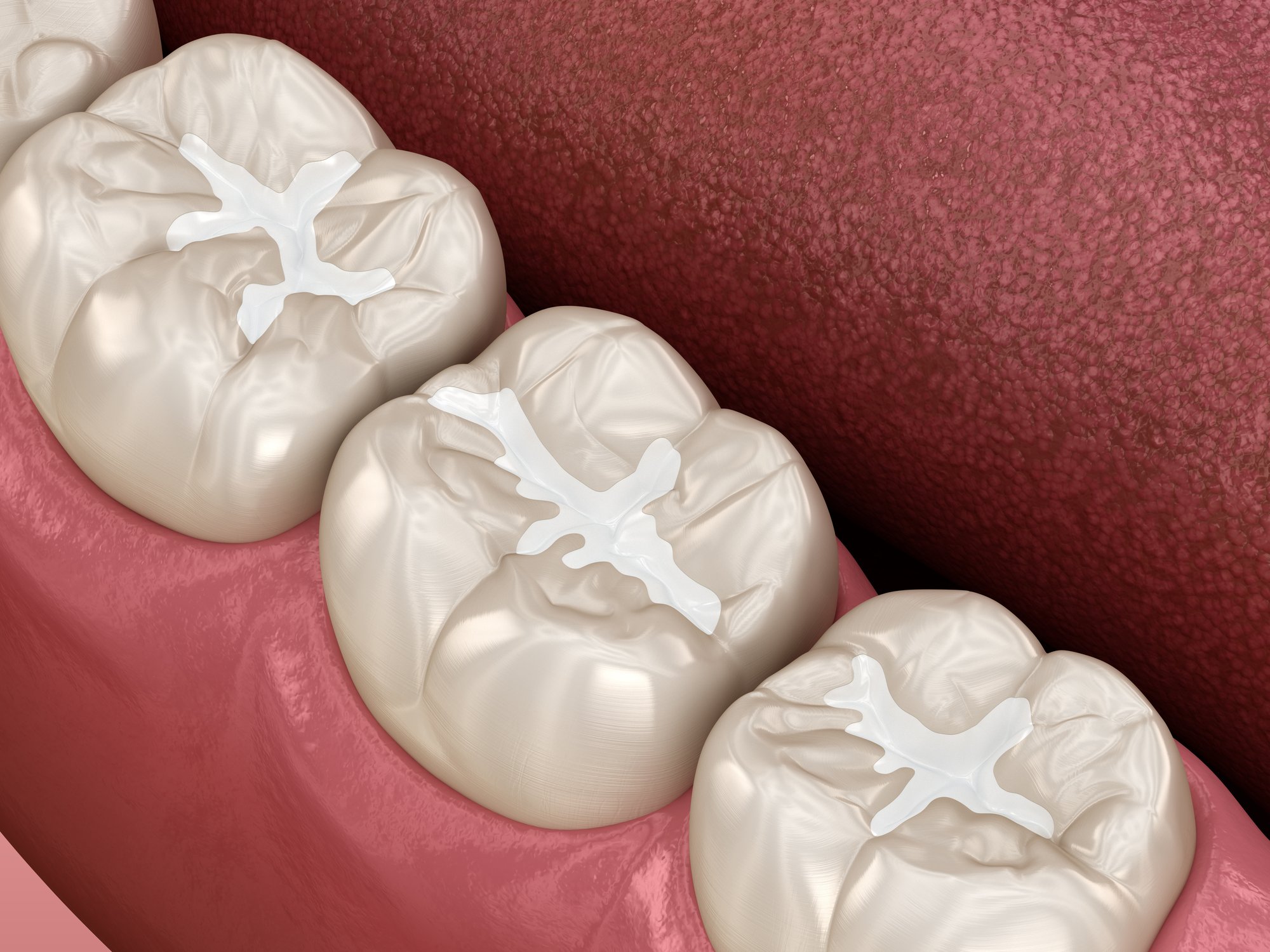
Wondering when your child should get dental sealants? Timing matters more than you might think. Most kids get sealants soon after the permanent molars appear, around ages 6 and 12. A dental sealant is a protective coating painted onto the chewing surface of a back tooth to block decay. Sealing molars right after they erupt gives the best protection, before cavities have a chance to start. Getting the timing right is the whole game with sealants.
Key Takeaways
- The first permanent molars arrive around age 6 and should be sealed shortly after erupting.
- The second set of molars comes in near age 12 and gets sealed on the same timeline.
- Sealants flow into the deep grooves of back teeth, where a toothbrush cannot reach the bottom.
- Research shows sealants prevent up to 80 percent of molar cavities in the first two years.
- Dentists check sealants at routine visits and can repair a worn one in minutes.
What Age Should Kids Get Sealants?
The right age follows the teeth, not the birthday. According to the Centers for Disease Control and Prevention, the first molars usually come in around age 6 and the second molars around age 12, and sealing them at those times works best. Dental sealants for kids are placed as each set of molars finishes coming in. A dentist checks for new molars at regular visits and seals them before decay starts. Some kids with deep grooves in their baby molars may get those sealed too. The dentist decides tooth by tooth as the molars appear, and sealing a molar the moment it is ready is the ideal window.
How Do Sealants Protect Teeth?
Back teeth are the hardest to keep clean. Molars have deep grooves, called pits, that trap food and bacteria a toothbrush cannot reach. A sealant flows into those grooves and hardens into a smooth shield. This keeps out the germs and food bits that cause cavities. It is a quick, painless coating that adds real protection where kids need it most. Most childhood cavities form on these chewing surfaces, which is exactly what sealants cover. Fluoride protects the smooth surfaces, sealants handle the grooves, and the coating is so thin you cannot feel it once it sets.
How Long Do Sealants Last?
Sealants are long-lasting but not permanent. Many parents wonder how long do sealants last, and the answer is often several years, sometimes up to a decade. Studies show sealants help prevent up to 80% of cavities in back teeth for the first two years, and they keep protecting at a lower level for years after. Chewing slowly wears them down, and one can chip. That is why a dentist checks them at regular visits. A worn sealant is easy to touch up before decay gets a foothold.
How Often Should Sealants Be Checked?
Sealants need simple upkeep, not constant work. A dentist looks at them during each six-month checkup to make sure they are still intact. If one has worn or chipped, it can be repaired quickly by adding more material. Good brushing and flossing still matter, since sealants only cover the chewing surface. Regular visits keep the protection working year after year. Pairing sealants with good brushing gives the strongest protection, and checkups are the perfect time for this quick look. If a sealant is missing, the tooth can be resealed the same day.
Are Sealants Worth It?
For most kids, the answer is a clear yes. Parents often ask, are sealants worth it, given the cost and effort? Research shows children without sealants get many more cavities in their back teeth than kids who have them. Sealing a tooth is quick, painless, and much cheaper than treating a cavity later. For kids at higher risk of decay, sealants are among the best preventive steps available. They also spare kids the discomfort and cost of fillings down the road, which makes them a smart, low-cost choice for many families.
Frequently Asked Questions
At what age can a child first get sealants?
Usually around age 6, when the first permanent molars come in. The second molars are typically sealed around age 12.
Do baby teeth ever get sealants?
Sometimes. If a baby molar has deep grooves or your child is at high risk for cavities, a dentist may seal it.
Does getting a sealant hurt?
No. Applying a sealant is quick and painless; it does not require any numbing.
Protecting Your Child’s Smile Early
The best time for kids to get sealants is right after their permanent molars come in, around ages 6 and 12. Dental sealants shield the deep grooves of back teeth, where most childhood cavities form. They last for years, get checked at regular visits, and are easy to repair. Sealing molars early is a simple, low-cost way to protect your child’s smile for years to come.
If you want to learn more about the right age for kids to get sealants, visit our Dental Sealants in Milwaukee, WI page or schedule a consultation.